

Picking goat names sounds easy until you meet the goat. One kid screams at the gate, and another stares at you like a tiny judge. A name has to fit that personality, and it will stick for years. This guide gives you ideas with meanings, origins and real examples.
Ever called your goat and watched it walk away like you never spoke? Often the problem is the name, not the goat. Short, clear names are easier for goats to learn. Read on and pick one your goat will actually answer to.
How to Choose the Perfect Goat Name
Direct answer: Pick a short name, one or two syllables, that fits your goat’s look or personality and does not sound like another goat’s name.
Goats learn names the way kids learn nicknames. They hear it, link it to food and then run to you. Registered goats usually carry a long herd name on paper. The barn name is the short one you shout across the field.
- Keep it to one or two syllables.
- Watch your goat for a few days before you decide.
- Avoid good names for goats that sound alike, like Bella and Stella.
- Skip words that sound like commands, like “No” or “Stay”.
- Say it out loud across the yard before you commit.
Best Goat Names
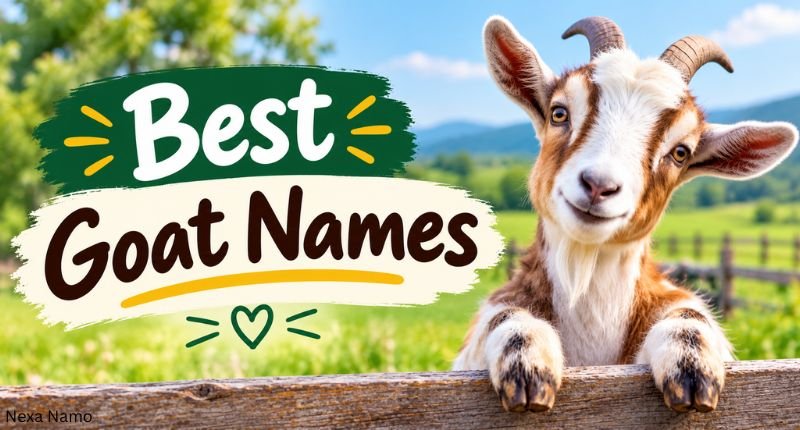
The best goat names are short, warm and easy to shout. You will say it hundreds of times, so keep it simple. Nature and classic names work well because they suit any goat owner and any herd. Here are fifteen picks that never feel wrong.
1. Clover Meaning: a lucky plant. Origin: Old English. Use: a sweet doe or kid that loves pasture. Example: “Clover, grain time!”
2. Willow Meaning: a graceful, bendy tree. Origin: Old English. Use: a slim, calm goat. Example: “Willow naps by the shed.”
3. Atlas Meaning: the one who carries heavy things. Origin: Greek myth. Use: a strong buck. Example: “Atlas pushed the gate open again.”
4. Juniper Meaning: an evergreen shrub. Origin: Latin. Use: a tough, hardy goat. Example: “Juniper leads the herd uphill.”
5. Maple Meaning: a tree with sweet sap. Origin: Old English. Use: a red or caramel coat. Example: “Maple loves apple slices.”
6. Scout Meaning: one who looks ahead. Origin: Old French. Use: a curious goat that checks every corner. Example: “Scout found the loose fence.”
7. Pepper Meaning: a sharp spice. Origin: Old English. Use: a speckled or spicy-tempered goat. Example: “Pepper kicked the feed bucket.”
8. Hazel Meaning: the hazelnut tree. Origin: Old English. Use: a brown goat or one with brown eyes. Example: “Hazel, come here, girl.”
9. Biscuit Meaning: a baked treat. Origin: Old French. Use: a golden, sweet goat. Example: “Biscuit stole my sandwich.”
10. Ranger Meaning: a forest guard. Origin: Middle English. Use: a buck who patrols the fence. Example: “Ranger watches the gate.”
11. Daisy Meaning: “day’s eye,” for a flower that opens at dawn. Origin: Old English. Use: a cheerful white doe. Example: “Daisy greets me at sunrise.”
12. Thor Meaning: thunder. Origin: Old Norse. Use: a loud, strong buck. Example: “Thor shouted all night.” In Norse myth, two goats pulled his chariot.
13. Olive Meaning: the olive tree. Origin: Latin. Use: a calm, gentle goat. Example: “Olive naps in the sun.”
14. Finn Meaning: fair or white. Origin: Irish. Use: a light-colored goat. Example: “Finn follows me everywhere.”
15. Poppy Meaning: a bright red flower. Origin: Latin. Use: a lively kid. Example: “Poppy jumped on the hay bale.”
Unique Goat Names
Unique goat names make your goat stand out at the fair and on the farm. Look at space, plants, sounds and old words for goat name ideas. A rare name also helps when you own three Daisies. Here are fifteen unusual picks with real roots.
1. Pixel Meaning: a tiny dot on a screen. Origin: modern tech word. Use: a small, quick goat. Example: “Pixel zoomed past the barn.”
2. Echo Meaning: a sound that comes back. Origin: Greek myth. Use: a goat that bleats loudly. Example: “Echo, quiet down, girl!”
3. Nebula Meaning: a cloud of space dust. Origin: Latin. Use: a gray or speckled coat. Example: “Nebula looks like a storm cloud.”
4. Kismet Meaning: fate or destiny. Origin: Turkish, from Arabic. Use: a goat you found by chance. Example: “Kismet showed up at our gate.”
5. Zephyr Meaning: a soft west wind. Origin: Greek. Use: a fast, light goat. Example: “Zephyr ran the whole field.”
6. Vesper Meaning: the evening star. Origin: Latin. Use: a calm goat born at dusk. Example: “Vesper was born at sunset.”
7. Indigo Meaning: a deep blue dye. Origin: Greek. Use: a black goat with a blue shine. Example: “Indigo gleams in the sun.”
8. Ember Meaning: a glowing coal. Origin: Old English. Use: a red goat. Example: “Ember has a fiery temper.”
9. Saffron Meaning: a golden spice. Origin: Arabic, via French. Use: a golden-tan goat. Example: “Saffron loves carrot tops.”
10. Fennel Meaning: an aromatic herb. Origin: Latin. Use: a goat that loves herbs. Example: “Fennel raided the herb bed.”
11. Sprocket Meaning: a toothed wheel part. Origin: English, engineering word. Use: a busy, tinkering goat. Example: “Sprocket opened the latch again.”
12. Tango Meaning: a dance for two. Origin: Spanish. Use: a fancy stepper or one of a pair. Example: “Tango prances at feeding time.”
13. Orbit Meaning: a path around something. Origin: Latin. Use: a goat who circles you for treats. Example: “Orbit circles me every morning.”
14. Quill Meaning: a feather pen. Origin: Middle English. Use: a thin goat with a sharp look. Example: “Quill nibbled my notebook.”
15. Marigold Meaning: a golden flower. Origin: English. Use: a gold or cream doe. Example: “Marigold, you’re up first.”
Cute Goat Names
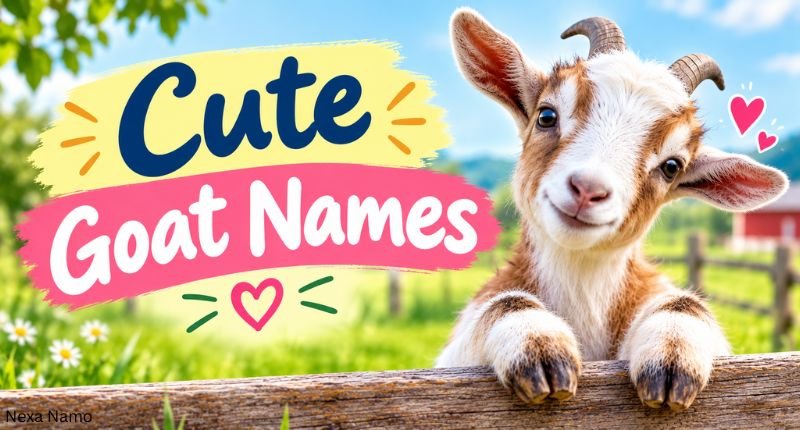
Cute goat names are perfect for a small kid with big eyes. Food names win here because they sound soft and sweet. If you enjoy finding playful ideas for animals, you can also explore these deer names for more cute, funny, and unique inspiration. Say “Waffles” out loud and try not to smile. Here are fifteen adorable picks for playful goats.
1. Pumpkin Meaning: a round orange squash. Origin: Greek, via French. Use: a round, tan kid. Example: “Pumpkin hops in the hay.”
2. Waffles Meaning: a crisp breakfast treat. Origin: Dutch. Use: a goat with square-like spots. Example: “Waffles wants a snack.”
3. Jellybean Meaning: a small sweet candy. Origin: American. Use: a tiny, colorful kid. Example: “Jellybean fits in my lap.”
4. Sprinkles Meaning: tiny candy bits. Origin: English. Use: a goat with many small spots. Example: “Sprinkles is covered in dots.”
5. Button Meaning: a small round fastener. Origin: Old French. Use: a kid with a round nose. Example: “Button is cute as a button.”
6. Peaches Meaning: a soft, sweet fruit. Origin: Latin. Use: a pale orange goat. Example: “Peaches loves belly rubs.”
7. Muffin Meaning: a small baked cake. Origin: English. Use: a plump, sweet goat. Example: “Muffin follows me to the barn.”
8. Nibbles Meaning: small bites. Origin: English. Use: a goat that chews everything. Example: “Nibbles ate my glove.”
9. Marshmallow Meaning: a soft white candy. Origin: the marsh mallow plant. Use: a fluffy white goat. Example: “Marshmallow is so soft.”
10. Peanut Meaning: a small nut. Origin: English. Use: the smallest kid in the litter. Example: “Peanut is the tiniest of the three.”
11. Pickles Meaning: food kept in brine. Origin: Dutch. Use: a goat with a sour attitude. Example: “Pickles stole my hat.”
12. Honey Meaning: sweet golden food. Origin: Old English. Use: a gentle, golden goat. Example: “Honey, come here.”
13. Cupcake Meaning: a small frosted cake. Origin: American. Use: a pampered pet. Example: “Cupcake gets extra treats.”
14. Bubbles Meaning: tiny balls of air. Origin: English. Use: a bouncy, happy kid. Example: “Bubbles pops up like a spring.”
15. Cookie Meaning: a small sweet biscuit. Origin: Dutch. Use: a brown and cream goat. Example: “Cookie follows the feed bucket.”
Funny Goat Names
Funny goat names work because goats are funny. They climb your car, steal your hat and scream at dinner. A good pun matches that chaos. Here are fifteen pun names that get a laugh every time.
1. Goatzilla Meaning: a giant goat monster. Origin: pun on Godzilla, a Japanese film monster. Use: a big, loud buck. Example: “Goatzilla stomped the hay.”
2. Sir Baa-a-Lot Meaning: a knightly goat who bleats a lot. Origin: English pun. Use: a proud, noisy goat. Example: “Sir Baa-a-Lot demands breakfast.”
3. Baa-nana Peel Meaning: a banana peel pun. Origin: English pun. Use: a goat that slips on wet grass. Example: “Baa-nana Peel slid again.”
4. Mc-Goatface Meaning: a joke on “Boaty McBoatface.” Origin: an internet naming joke. Use: any goat you love teasing. Example: “Mc-Goatface, get down!”
5. Baaba Fett Meaning: a goat bounty hunter. Origin: pun on Boba Fett from Star Wars. Use: a goat that guards the fence. Example: “Baaba Fett watches the gate.”
6. Feta Meaning: a salty cheese. Origin: Greek. Use: a white goat. Example: “Feta, don’t eat the fence.”
7. Chewbaaca Meaning: a woolly Wookiee pun. Origin: pun on Chewbacca from Star Wars. Use: a hairy goat. Example: “Chewbaaca roars at the hay.”
8. Bleat Gatsby Meaning: a fancy goat pun. Origin: the novel The Great Gatsby. Use: a dapper goat. Example: “Bleat Gatsby struts the barn.”
9. Nanny McPhee Meaning: a stern nanny. Origin: a film character. Use: a doe who bosses the herd. Example: “Nanny McPhee runs the show.”
10. Nosebleat Meaning: a pun on nosebleed. Origin: English pun. Use: a goat that pokes its nose everywhere. Example: “Nosebleat sniffs my pockets.”
11. Goatee Meaning: a small chin beard. Origin: English, from goat. Use: a bearded buck. Example: “Goatee grooms his beard.”
12. Baa Humbug Meaning: grumpy about everything. Origin: Dickens’ A Christmas Carol. Use: a grumpy goat. Example: “Baa Humbug hates rain.”
13. Butterbutt Meaning: a silly nickname for a round behind. Origin: English slang. Use: a goat with a golden rump. Example: “Butterbutt wiggles when happy.”
14. Gouda Meaning: a mild cheese. Origin: a Dutch city. Use: a tan goat with a big appetite. Example: “Gouda eats before everyone.”
15. Hoof Hearted Meaning: a pun on hard-hearted. Origin: English pun. Use: a goat that never shares. Example: “Hoof Hearted guards the hay.”
Male Goat Names
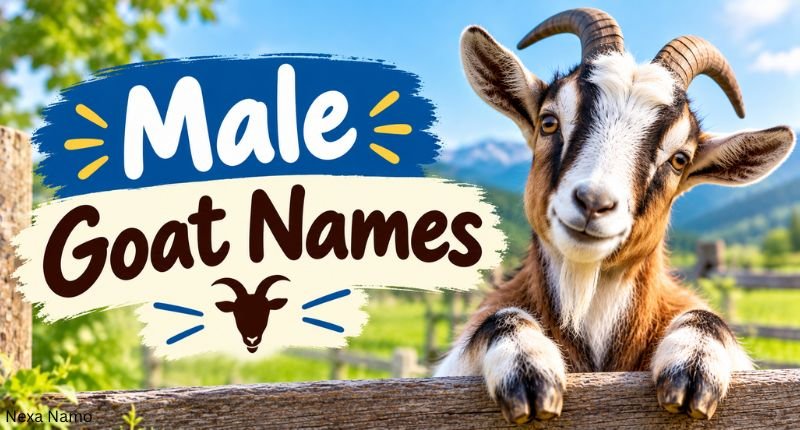
Male goat names can be strong, classic or just plain silly. A buck often gets a bold name, but a gentle wether can carry one too. Pick something you can say calmly and loudly. Here are fifteen strong picks.
1. Duke Meaning: a leader or noble. Origin: Latin, via French. Use: a proud, tall buck. Example: “Duke leads the line.”
2. Angus Meaning: one strength. Origin: Scottish Gaelic. Use: a black, sturdy goat. Example: “Angus pushes the gate.”
3. Gideon Meaning: great warrior. Origin: Hebrew. Use: a brave buck. Example: “Gideon guards the herd.”
4. Hank Meaning: ruler of the home. Origin: nickname for Henry. Use: a laid-back, friendly buck. Example: “Hank loves a scratch.”
5. Rocco Meaning: rest. Origin: Italian, from Germanic. Use: a calm, strong goat. Example: “Rocco naps all day.”
6. Tobias Meaning: God is good. Origin: Hebrew. Use: a gentle wether. Example: “Tobias eats from my hand.”
7. Beau Meaning: handsome. Origin: French. Use: a good-looking buck. Example: “Beau poses for photos.”
8. Jasper Meaning: a reddish-brown gemstone. Origin: Persian. Use: a brown or red goat. Example: “Jasper rules the hill.”
9. Cooper Meaning: barrel maker. Origin: English trade name. Use: a friendly farm goat. Example: “Cooper follows me home.”
10. Maverick Meaning: a free spirit. Origin: American, from a Texas rancher. Use: a goat that breaks every rule. Example: “Maverick jumped the fence.”
11. Titan Meaning: a giant. Origin: Greek myth. Use: the biggest goat in the herd. Example: “Titan eats first.”
12. Buster Meaning: a lively, tough kid. Origin: English slang. Use: a rowdy buck. Example: “Buster, off the truck!”
13. Gus Meaning: majestic. Origin: short for Augustus or Gustav. Use: an easygoing goat. Example: “Gus loves belly rubs.”
14. Leo Meaning: lion. Origin: Latin. Use: a bold buck with a thick coat. Example: “Leo struts like a lion.”
15. Bruno Meaning: brown. Origin: German. Use: a brown goat. Example: “Bruno hides in the mud.”
Read Also: 410+ Rohirrim Names & Meanings
Female Goat Names
Female goat names often come from flowers, old-fashioned people and soft sounds. A doe, or nanny, may be a milk queen or a shy girl. Her name should match her mood. Here are fifteen lovely picks.
1. Luna Meaning: moon. Origin: Latin. Use: a pale or night-born doe. Example: “Luna naps in the moonlight.”
2. Ruby Meaning: a red gemstone. Origin: Latin. Use: a red or brown doe. Example: “Ruby shines at the fair.”
3. Piper Meaning: one who plays the pipe. Origin: English. Use: a loud, musical bleater. Example: “Piper sings at dinner.”
4. Ophelia Meaning: help. Origin: Greek. Use: a gentle, dramatic doe. Example: “Ophelia hates puddles.”
5. Petunia Meaning: a garden flower. Origin: a South American word for tobacco, via French. Use: a pink-nosed goat. Example: “Petunia loves attention.”
6. Matilda Meaning: strong in battle. Origin: Germanic. Use: a tough old doe. Example: “Matilda rules the barn.”
7. Penelope Meaning: a loyal queen in Greek myth. Origin: Greek. Use: a patient doe. Example: “Penelope waits at the gate.”
8. Gertie Meaning: spear strength. Origin: Germanic, short for Gertrude. Use: a stout, strong doe. Example: “Gertie butts the bucket.”
9. Millie Meaning: gentle strength. Origin: short for Mildred or Amelia. Use: a sweet milker. Example: “Millie gives the best milk.”
10. Fern Meaning: a green leafy plant. Origin: Old English. Use: a goat that loves green pasture. Example: “Fern grazes by the creek.”
11. Winnie Meaning: fair and gentle. Origin: short for Winifred. Use: a sweet, round goat. Example: “Winnie waits for treats.”
12. Hattie Meaning: ruler of the home. Origin: nickname for Harriet. Use: an old-fashioned doe. Example: “Hattie bosses the kids.”
13. Rosie Meaning: rose. Origin: Latin. Use: a rosy-nosed doe. Example: “Rosie loves a brush.”
14. Stella Meaning: star. Origin: Latin. Use: a doe with a star on her forehead. Example: “Stella has a white star.”
15. Freya Meaning: lady. Origin: Norse myth. Use: a proud, graceful doe. Example: “Freya leads the herd.”
Gender-Neutral Goat Names
Some goats do not need a boy or girl name. Gender-neutral names like “Sage,” “River,” and “Ash” work for any kid, buck, or doe. They help when you bring home a baby and do not know the sex yet. If you enjoy simple animal naming ideas, you can also find more inspiration with these panda names. “Sage” means wise, while “Ash” fits a soft gray coat.
Goat Bucks Names
A buck needs a name with some muscle. Mythic and rugged picks fit goat names for bucks very well. “Zeus” (king of the Greek gods) and “Maverick” (a free spirit) are easy wins. Keep it short, because bucks can get loud near the fence.
Goat Doe Names
1. Clementine
Meaning: mild and merciful. Origin: Latin. Use: a gentle, kind-eyed doe. Example: “Clementine, time for milking!”
2. Dolly
Meaning: gift of God. Origin: nickname for Dorothy, Greek. Use: a sweet, round, friendly doe. Example: “Dolly waits by the gate every morning.”
3. Josie
Meaning: God will add. Origin: short for Josephine, Hebrew. Use: a bright, cheerful doe. Example: “Josie hops up to greet me.”
4. Lottie
Meaning: free woman. Origin: short for Charlotte, French. Use: a spirited doe who loves to roam. Example: “Lottie found the open gate again.”
5. Pearl
Meaning: a gem from the sea. Origin: Latin. Use: a white or cream doe. Example: “Pearl shines in the sunlight.”
6. Cleo
Meaning: glory. Origin: short for Cleopatra, Greek. Use: a proud, queenly doe. Example: “Cleo walks like she owns the pasture.”
7. Nellie
Meaning: bright light. Origin: pet name for Helen or Eleanor, Greek. Use: a calm, old-fashioned doe. Example: “Nellie is the first in line at milking time.”
8. Violet
Meaning: a small purple flower. Origin: Latin. Use: a soft, shy doe. Example: “Violet hides behind the hay bale.”
9. Ivy
Meaning: a climbing green plant. Origin: Old English. Use: a doe who climbs on everything. Example: “Ivy is on the woodpile again.”
10. Sadie
Meaning: princess. Origin: Hebrew, nickname for Sarah. Use: a sweet, gentle doe with a bit of sass. Example: “Sadie demands extra treats.”
Baby Goat Names
1. Hopper
Meaning: one who hops. Origin: English. Use: a bouncy kid who jumps for no reason. Example: “Hopper just cleared the hay bale!”
2. Sprout
Meaning: a young plant shoot. Origin: Old English. Use: a tiny kid in spring. Example: “Sprout is already chasing the chickens.”
3. Pip
Meaning: a small seed. Origin: English. Use: the smallest kid in the litter. Example: “Pip fits in a bucket.”
4. Bean
Meaning: a small, round seed. Origin: Old English. Use: a plump, sweet kid. Example: “Bean naps in my lap.”
5. Tumble
Meaning: to fall and roll. Origin: Middle English. Use: a wobbly newborn who falls often. Example: “Tumble tripped over her own legs again.”
6. Bumble
Meaning: a clumsy buzzing bee. Origin: English. Use: a clumsy, happy kid. Example: “Bumble bumped into the fence.”
7. Skip
Meaning: to hop lightly. Origin: Middle English. Use: a lively kid who jumps and plays. Example: “Skip bounces across the yard.”
8. Twinkle
Meaning: to sparkle. Origin: Old English. Use: a kid with bright, shiny eyes. Example: “Twinkle follows me everywhere.”
9. Tater
Meaning: short for potato. Origin: Spanish, from a Taino word. Use: a round, small kid. Example: “Tater is the chubbiest of the litter.”
10. Squirt
Meaning: small and lively. Origin: English. Use: a tiny but loud kid. Example: “Squirt bleats the loudest at feeding time.”
Goat names for specific colors or patterns
Your goat’s coat is a free naming clue, so try goat names by color first. “Midnight” fits a black goat, and “Cocoa” fits a brown one. A spotted goat can be “Domino” or “Pinto”. Pinto comes from a Spanish word for painted.
Read Also: Names That Mean Shark
Black and White Goat Names
Two-tone goats look like cartoon characters. Black and white goat names like “Oreo”, “Domino” and “Panda” match that look fast. “Domino” may come from a black and white hooded cloak. Use one if your goat has clear patches.
White Goat Names
White goats glow in the field. White goat names like “Snowball”, “Casper” and “Pearl” are easy fits. “Casper” is a friendly ghost, which suits a pale, quiet goat. Match the name to the shade, from bright white to cream.
Black Goat Names
Black goats look sleek and a little mysterious. Black goat names like “Raven”, “Onyx” and “Shadow” suit that dark coat. “Onyx” is a black gemstone, and the word comes from the Greek word for nail. Choose a shiny name if the coat gleams in the sun.
Brown Goat Names
Brown goats look warm and earthy. Brown goat names often come from food, like “Mocha”, “Toffee” and “Hazelnut”. “Mocha” comes from a Yemeni port city famous for coffee. Match the name to the shade, from light tan to deep chocolate.
Goat Names Based on Breed (Nigerian Dwarf, Boer, Alpine & More)
Breed can guide your pick. A Nigerian Dwarf goat is small, so cute names like “Pixie” fit. A stocky Boer suits “Tank”, and an Alpine suits “Heidi”. Nubians have long ears, so “Flopsy” is a fun match.
Goat Names With Beards
Beards make goats look wise. Wizard and king names fit goat names with beards perfectly. “Gandalf”, “Merlin” and “Odin” are common picks. Odin was the Norse father of the gods, often drawn with a long beard.
Goat Names With Curly Fleeces
Some goats, like Angora goats, grow long, curly fleece. Goat names with curly fleeces include “Cotton”, “Curly” and “Merino”. “Merino” is a famous wool sheep breed from Spain. A woolly name for a fluffy goat always gets a smile.
Mountain Goat Names
1. Everest
Meaning: the world’s highest mountain. Origin: named after George Everest, a British surveyor. Use: a tall, proud goat who climbs everything. Example: “Everest is on the roof again.”
2. Sierra
Meaning: a saw, used for jagged mountain ranges. Origin: Spanish. Use: a sharp-horned, agile doe. Example: “Sierra leaps from rock to rock.”
3. Olympus
Meaning: the home of the gods. Origin: Greek myth. Use: a buck who rules the highest spot. Example: “Olympus watches the herd from the hill.”
4. Aspen
Meaning: a tree that grows on mountain slopes. Origin: Old English. Use: a graceful goat with a light coat. Example: “Aspen naps in the shade.”
5. Granite
Meaning: a hard, speckled rock. Origin: Italian. Use: a gray, sturdy goat. Example: “Granite never backs down.”
6. Sherpa
Meaning: a mountain guide of the Himalayas. Origin: Tibetan. Use: a goat who leads the herd uphill. Example: “Sherpa guides everyone to the hay.”
7. Boulder
Meaning: a large, round rock. Origin: Middle English, from Scandinavian words. Use: a heavy, stubborn goat. Example: “Boulder will not move from the gate.”
8. Cliff
Meaning: a steep rock face. Origin: Old English. Use: a daring goat who loves high edges. Example: “Cliff stands on the tallest stump.”
9. Alpine
Meaning: of the high mountains. Origin: Latin, from the Alps. Use: a goat with a cool, calm look. Example: “Alpine climbs the woodpile every day.”
10. Rocky
Meaning: full of rocks, or tough. Origin: English. Use: a rugged, fearless buck. Example: “Rocky bounced off the fence and tried again.”
Traditional Goat Names
1. Bessie
Meaning: God is my oath. Origin: short for Elizabeth, Hebrew. Use: a gentle, motherly doe. Example: “Bessie comes running at milking time.”
2. Sally
Meaning: princess. Origin: nickname for Sarah, Hebrew. Use: a sweet, friendly doe. Example: “Sally loves a good scratch.”
3. Rusty
Meaning: reddish-brown. Origin: English. Use: a red or brown goat. Example: “Rusty hides in the dry leaves.”
4. Charlie
Meaning: free man. Origin: Germanic, from Charles. Use: an easygoing buck or wether. Example: “Charlie, leave my hat alone!”
5. Ginger
Meaning: a warm, spicy root. Origin: Old English, from Latin. Use: a red or tan goat with spice. Example: “Ginger stole the carrots.”
6. Maggie
Meaning: pearl. Origin: short for Margaret, Greek. Use: a calm, old-fashioned doe. Example: “Maggie follows me to the barn.”
7. Sam
Meaning: God has heard. Origin: short for Samuel, Hebrew. Use: a simple name for any goat. Example: “Sam, breakfast is ready.”
8. Penny
Meaning: a small coin. Origin: English. Use: a small, shiny-eyed doe. Example: “Penny is worth her weight in gold.”
9. Jack
Meaning: God is gracious. Origin: nickname for John, Hebrew. Use: a classic name for a buck. Example: “Jack leads the way.”
10. Tilly
Meaning: strong in battle. Origin: short for Matilda, Germanic. Use: a small, tough doe. Example: “Tilly bossed the whole herd.”
Mythical Goat Names
Greek myth is full of goats. Mythical goat names like “Pan” (half man, half goat) and “Amalthea” (said to have nursed baby Zeus) have real roots. “Capricorn”, the sea goat of the zodiac, is a bold choice. These mythology names suit goats with big attitudes.
Famous Goat Names
Stories gave us many famous goats. Famous goat names include “Black Phillip” from the 2015 film The Witch and “Gruff” from the Norwegian tale The Three Billy Goats Gruff. “Mr. Tumnus” is the faun from The Lion, the Witch and the Wardrobe. Pick one that your goat can live up to.
Pop Culture & Fictional Character Goat Names
Fans love character names. “Leia,” “Hermione,” and “Yoda” can bring a little personality to a farm goat. A fictional character name tells visitors what you love and gives your goat a name with a story behind it. The same idea works for other pets too, where choosing a name based on color, personality, or appearance can make the process more fun. For more animal naming ideas, you can also check out these green fish names. Pick a character who matches your goat’s mood, not just your favorite show.
Food-Themed Goat Names
1. Pretzel
Meaning: a twisted, salty baked snack. Origin: German. Use: a goat with a curly tail or a twisty personality. Example: “Pretzel, come get your snack!”
2. Nacho
Meaning: a cheesy chip snack, also a Spanish nickname for Ignacio. Origin: Mexican Spanish. Use: a spicy, cheeky goat. Example: “Nacho stole my lunch.”
3. Latte
Meaning: milk. Origin: Italian. Use: a light brown and cream goat. Example: “Latte naps in the morning sun.”
4. Mango
Meaning: a sweet, golden tropical fruit. Origin: Tamil, via Portuguese. Use: a golden or orange-tan goat. Example: “Mango loves apple slices.”
5. Nutmeg
Meaning: a warm, brown spice. Origin: Middle English, from Old French. Use: a brown goat with a spicy temper. Example: “Nutmeg butted the feed bucket.”
6. Taco
Meaning: a folded tortilla dish. Origin: Mexican Spanish. Use: a fun, lively goat that bounces around. Example: “Taco, dinner time!”
7. Brownie
Meaning: a chocolate baked treat. Origin: English, from the color brown. Use: a dark brown, sweet goat. Example: “Brownie follows me everywhere.”
8. Pancake
Meaning: a flat breakfast cake. Origin: English. Use: a goat who loves to lie flat in the sun. Example: “Pancake naps by the fence.”
9. Churro
Meaning: a fried, sugary dough stick. Origin: Spanish. Use: a tall, slim goat with a golden coat. Example: “Churro is the first at the gate.”
10. Cinnamon
Meaning: a sweet, warm spice. Origin: Greek, via Latin. Use: a reddish-brown goat. Example: “Cinnamon loves a good scratch.”
Goat Names Based on Personality
1. Boss
Meaning: the one in charge. Origin: Dutch. Use: a bold goat who leads the herd. Example: “Boss eats first, every time.”
2. Chaos
Meaning: total confusion. Origin: Greek. Use: a goat who causes trouble. Example: “Chaos opened the feed bin again.”
3. Giggles
Meaning: soft, silly laughter. Origin: English. Use: a playful, bouncy goat. Example: “Giggles jumps for no reason.”
4. Shadow
Meaning: a dark shape that follows you. Origin: Old English. Use: a goat who follows you everywhere. Example: “Shadow waits at the door.”
5. Bandit
Meaning: a thief. Origin: Italian. Use: a sneaky goat who steals snacks. Example: “Bandit grabbed my sandwich.”
6. Sunny
Meaning: bright and cheerful. Origin: English. Use: a happy, friendly goat. Example: “Sunny greets everyone at the gate.”
7. Diva
Meaning: a star singer, or a goddess. Origin: Italian. Use: a dramatic goat who demands attention. Example: “Diva refuses to share the hay.”
8. Zen
Meaning: calm, deep focus. Origin: Japanese. Use: a quiet, relaxed goat. Example: “Zen chews slowly and watches the clouds.”
9. Houdini
Meaning: an escape artist. Origin: the stage name of the famous magician Harry Houdini. Use: a goat who always escapes the pen. Example: “Houdini is out of the fence again.”
10. Tank
Meaning: a strong, heavy vehicle. Origin: English. Use: a big, stubborn goat who pushes through everything. Example: “Tank walked right through the gate.”
Names for goats in pairs or groups
1. Salt & Pepper
Meaning: two classic kitchen partners. Origin: English. Use: a black and white pair. Example: “Salt and Pepper, come here!”
2. Bonnie & Clyde
Meaning: a famous outlaw duo from the 1930s. Origin: American history. Use: two goats who escape together. Example: “Bonnie and Clyde broke out again.”
3. Thelma & Louise
Meaning: two best friends on a wild trip. Origin: the 1991 film of the same name. Use: two does who do everything together. Example: “Thelma and Louise share one hay bale.”
4. Peanut & Jelly
Meaning: a classic sandwich pair. Origin: American. Use: one small goat and one sweet goat. Example: “Peanut and Jelly nap side by side.”
5. Romeo & Juliet
Meaning: two famous lovers. Origin: a play by William Shakespeare. Use: a buck and a doe who stay close. Example: “Romeo and Juliet never leave each other.”
6. Rosemary, Sage & Thyme
Meaning: three kitchen herbs. Origin: English, from Latin and Greek. Use: a trio of does or kids. Example: “Rosemary, Sage and Thyme, line up!”
7. Oak, Maple & Birch
Meaning: three strong trees. Origin: Old English. Use: a group of three goats with brown or tan coats. Example: “Oak, Maple and Birch graze under the trees.”
8. Mercury, Venus & Mars
Meaning: three planets. Origin: Roman gods. Use: a trio with big personalities. Example: “Mercury, Venus and Mars rule the pasture.”
9. Sun & Moon
Meaning: day and night. Origin: English. Use: one light goat and one dark goat. Example: “Sun and Moon share the barn.”
10. Lewis & Clark
Meaning: two American explorers. Origin: the 1804 to 1806 expedition across America. Use: two goats who love to explore. Example: “Lewis and Clark found the open gate.”
Goat Names for Pet, Dairy & Show Goats
A pet goat can have a silly name, but a show or dairy goat needs two. The official name goes on the registration papers. The barn name is what you shout at feeding time. Keep the barn name short, even if the paper name is long.
Goat Names From Around the World
1. Bakri
Meaning: a female goat. Origin: Urdu and Hindi. Use: a doe with a classic, local touch. Example: “Bakri, come get your grain!”
2. Bakra
Meaning: a male goat. Origin: Urdu and Hindi. Use: a proud buck with a bold personality. Example: “Bakra leads the herd to water.”
3. Cabra
Meaning: goat. Origin: Spanish and Portuguese. Use: a simple, fun name for any goat. Example: “Cabra climbed the wall again.”
4. Chèvre
Meaning: goat, and also a soft goat cheese. Origin: French. Use: a fancy, soft-spoken white goat. Example: “Chèvre, dinner is served.”
5. Amir
Meaning: prince. Origin: Arabic. Use: a proud, handsome buck. Example: “Amir struts around the pen.”
6. Noor
Meaning: light. Origin: Arabic. Use: a bright white or cream doe. Example: “Noor glows in the morning sun.”
7. Chandni
Meaning: moonlight. Origin: Hindi and Urdu. Use: a pale doe born at night. Example: “Chandni naps under the moon.”
8. Sakura
Meaning: cherry blossom. Origin: Japanese. Use: a doe with a soft pink nose. Example: “Sakura loves sweet leaves.”
9. Heidi
Meaning: noble. Origin: German, short for Adelheid. Use: an Alpine goat, since the Swiss story Heidi is set in the mountains with goats. Example: “Heidi bounds up the hill.”
10. Aroha
Meaning: love. Origin: Māori. Use: a sweet, affectionate goat. Example: “Aroha follows me everywhere.”
Inappropriate Goat Names
These are 10 names to skip. Each one has a reason, plus a better pick.
1. Stinky
Meaning: smelly. Why to avoid: it makes a normal goat sound dirty, and visitors will wonder how you care for it. Better pick: “Pepper” or “Smokey”. Example: “Pepper is a spicy little girl.”
2. Loser
Meaning: someone who fails. Why to avoid: it is a negative label, and you will say it daily. Better pick: “Champ” or “Lucky”. Example: “Champ won the best-in-show ribbon.”
3. Dummy
Meaning: a silly or slow person. Why to avoid: goats are smart, and the name sounds like an insult. Better pick: “Einstein” or “Sage”. Example: “Sage opened the latch in two seconds.”
4. Ugly
Meaning: not pretty. Why to avoid: it sounds mean, and the name sticks for years. Better pick: “Scruffy” or “Fuzzy”. Example: “Scruffy has the funniest beard.”
5. Fatty
Meaning: an insult for a big body. Why to avoid: it makes fun of a goat’s shape, and it may be a health sign worth checking instead. Better pick: “Muffin” or “Dumpling”. Example: “Muffin loves her hay.”
6. Psycho
Meaning: a violent or unstable person. Why to avoid: it sounds harsh, and it can upset visitors. Better pick: “Chaos” or “Wildcard”. Example: “Chaos bounced off the walls again.”
7. Brat
Meaning: a spoiled child. Why to avoid: it sounds rude if it is said in front of guests, especially kids. Better pick: “Diva” or “Princess”. Example: “Diva demands the best hay.”
8. Freak
Meaning: a strange or odd person. Why to avoid: it labels a goat as strange, which is unkind. Better pick: “Quirky” or “Pixel”. Example: “Pixel is one of a kind.”
9. Trouble
Meaning: a problem. Why to avoid: it sets a bad expectation, and your goat may live up to it. Better pick: “Houdini” or “Bandit”. Example: “Houdini escaped the pen again.”
10. Pest
Meaning: an annoying creature. Why to avoid: it sounds unkind, and it can sound like a joke about vermin. Better pick: “Nibbles” or “Giggles”. Example: “Giggles follows me everywhere.”
FAQs
What are some good names for a Nigerian Dwarf goat?
“Pixie”, “Toffee” and “Nibbles” fit well. This breed is small and playful, so cute, light names suit it.
How can I come up with a unique name for my goat?
Start with your goat’s habit, color or favorite food, then add a twist. A pun or a word from another language works great.
Are there names that suit male goats better than female goats?
Only by habit, not by rule. Bold names like “Duke” often go to bucks and soft ones like “Daisy” to does, but any name can work.
Can I name my goat after a fictional character?
Yes, you can. Pick a character with a short name, like “Leia” or “Yoda”, so it is easy to call.
What themes can I use for goat names?
Popular themes are food, nature, mythology, colors, music and movies. Pick one you love so the ideas keep coming.
Is it okay to name a goat something silly?
Yes, silly names are fine. A name like “Goatzilla” just needs to be easy to say and not rude.
How do I choose the right name for my goat if I have multiple?
Give each goat a name with a different sound. Avoid pairs like Bella and Stella, which confuse both goats and people.
Should I change my goat’s name if I adopt them?
Keep the old name if the goat already answers to it. If you must change it, say the new name before treats for a few weeks.
Do goats know their own names?
Yes, many goats learn their names. They link your voice and the name with food and attention, so repeat it daily.
What do you call a male goat and a female goat?
A male is a buck or billy, and a female is a doe or nanny. A baby is a kid, and a castrated male is a wether.
What are the best short goat names that are easy to call?
One or two syllables work best, like “Milo”, “Pip” or “Rue”. They are quick to shout across a field.
What are the most popular goat names?
Common picks include Daisy, Luna, Willow, Clover and Peanut. A small twist, like “Daisy Mae”, makes yours stand out.
Conclusion
The best goat names match your goat’s look, voice and daily habits. Start with a short name that is easy to shout. Then add a pun, a food or a story that makes it yours. Use the lists above as a starting point, not a rulebook.
Your goat will answer to that name for years. So take a few days, watch the personality, and test the name out loud. If it makes you smile every morning, it is the right one. Pick one of these goat names today and give your new friend a proper welcome.

Rameez Sultan is the Founder of NexaNamo and a content writer with 3+ years of experience, dedicated to helping readers find creative and meaningful names for their businesses and personal projects.